China Daily:
Mixing it up,
2012-06-29
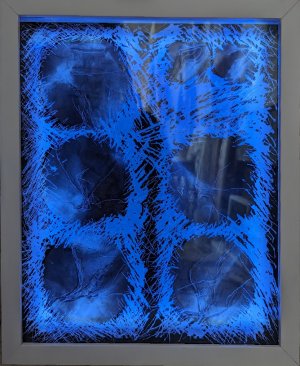
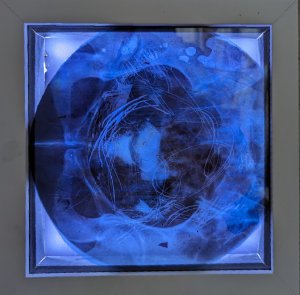
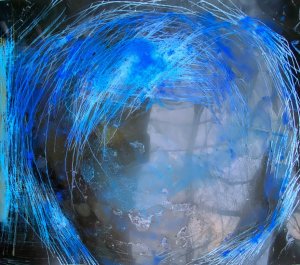
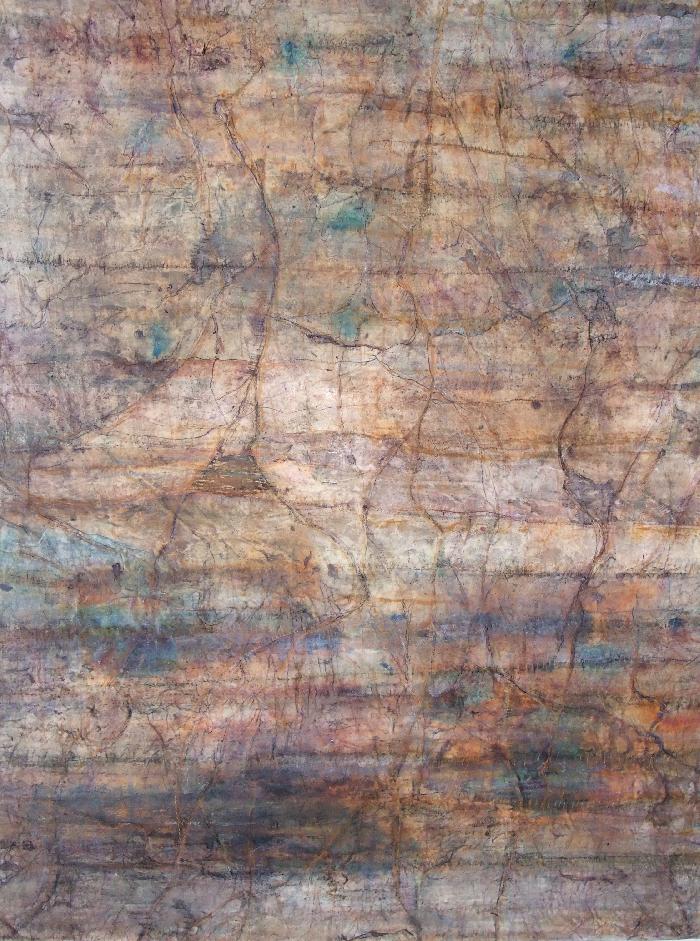
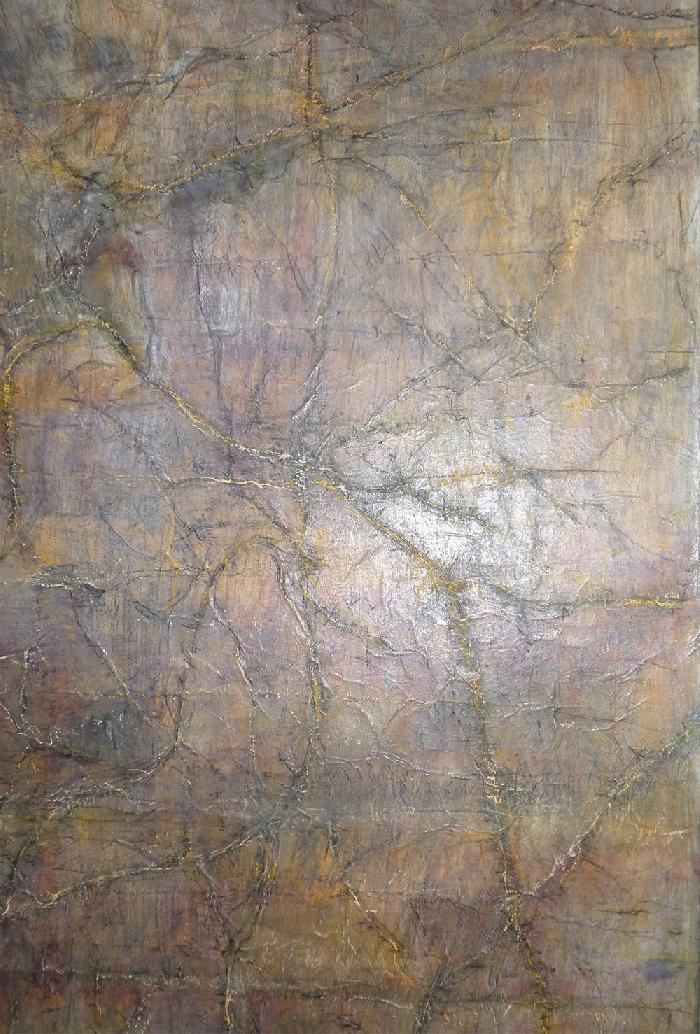
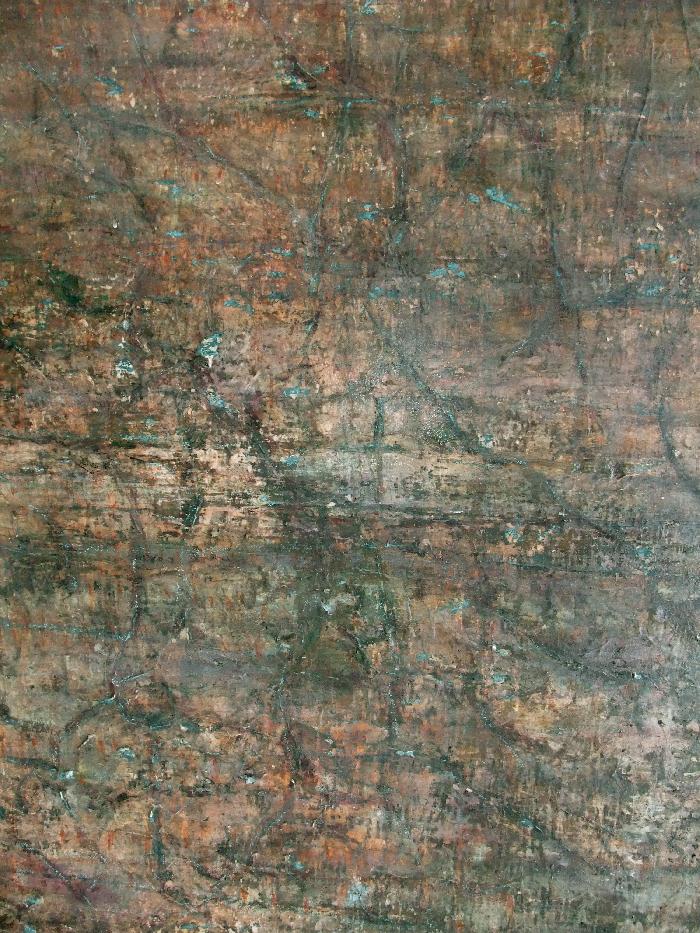
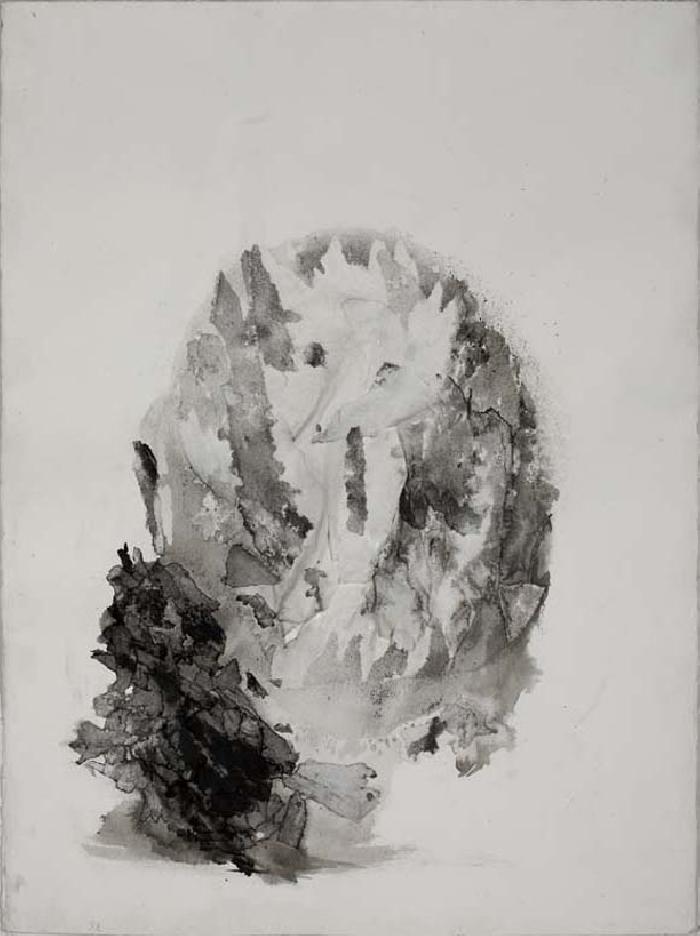
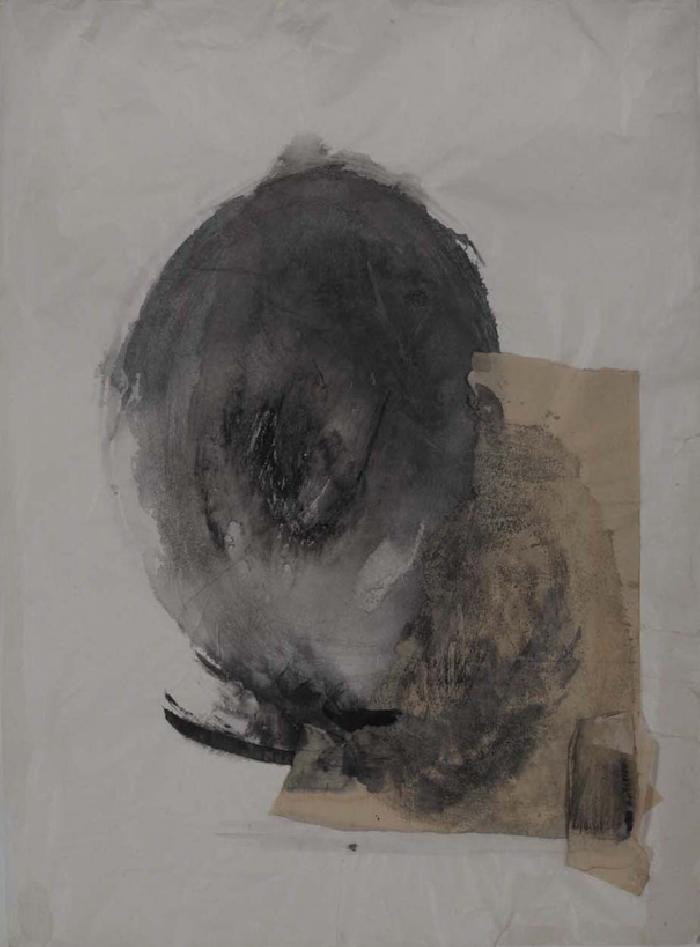
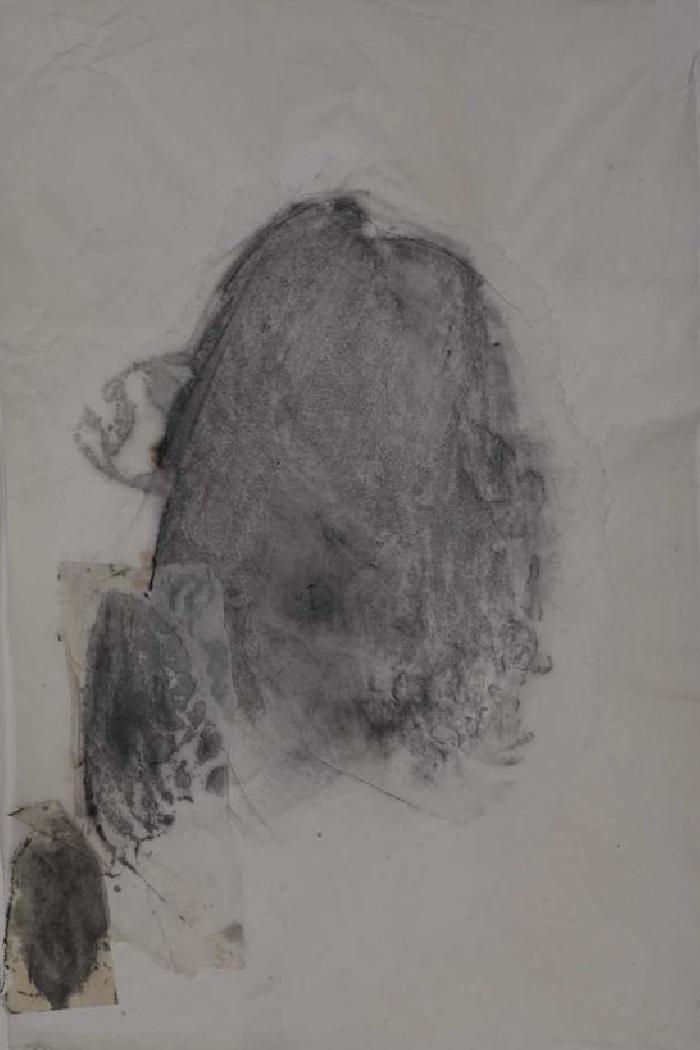
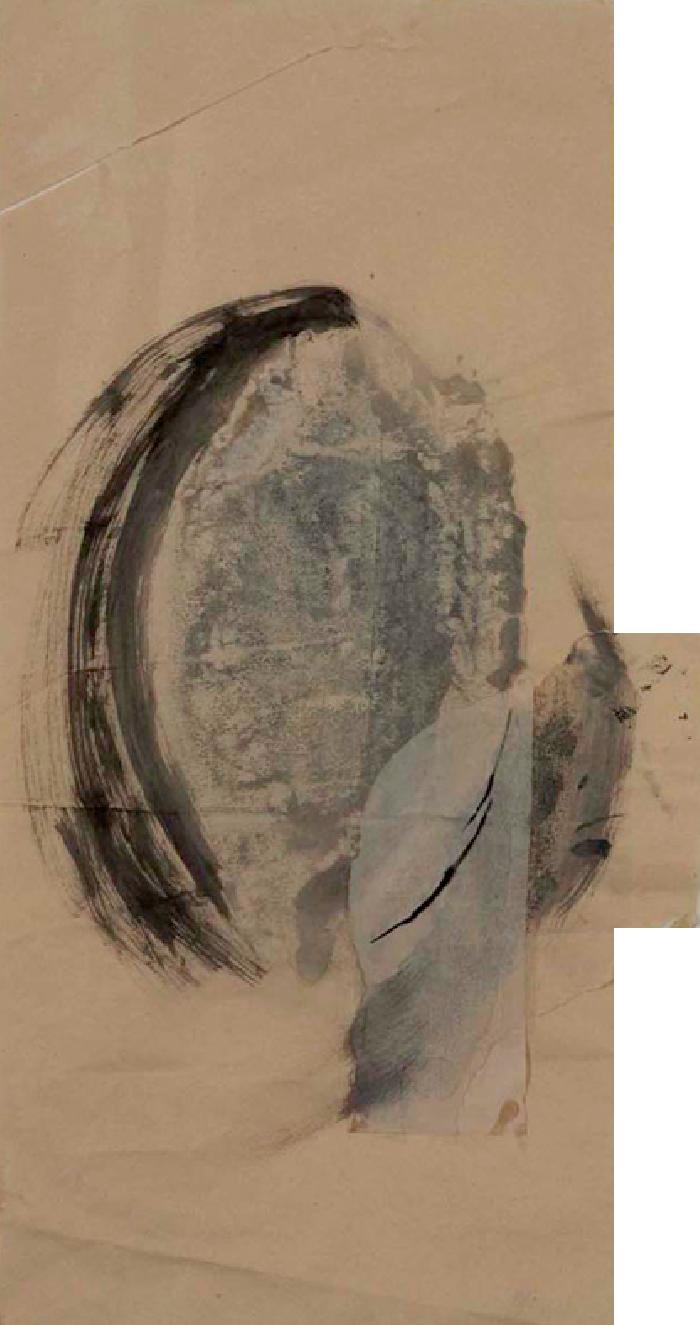
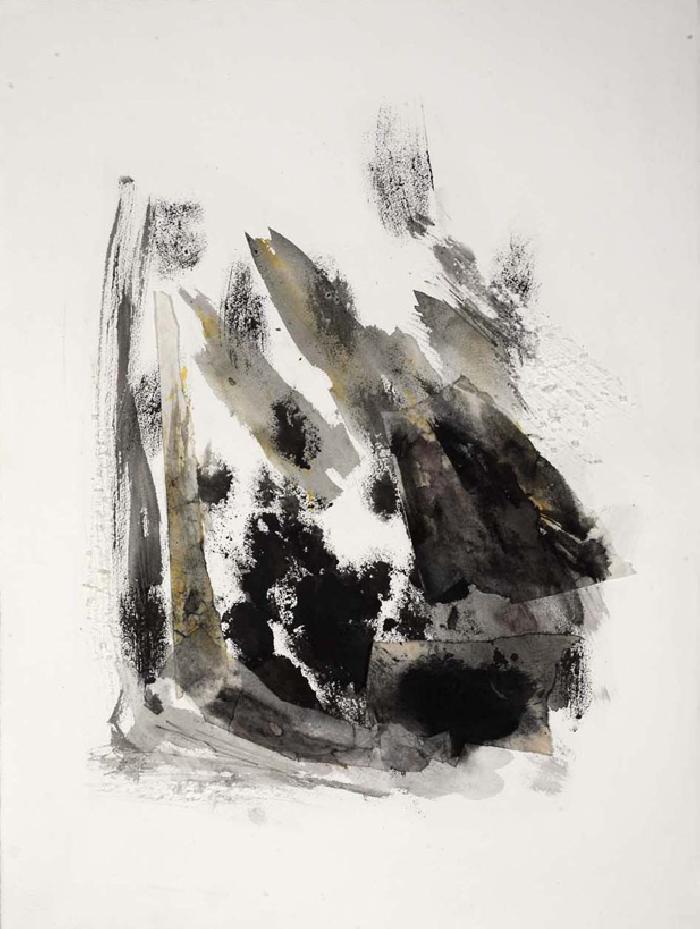
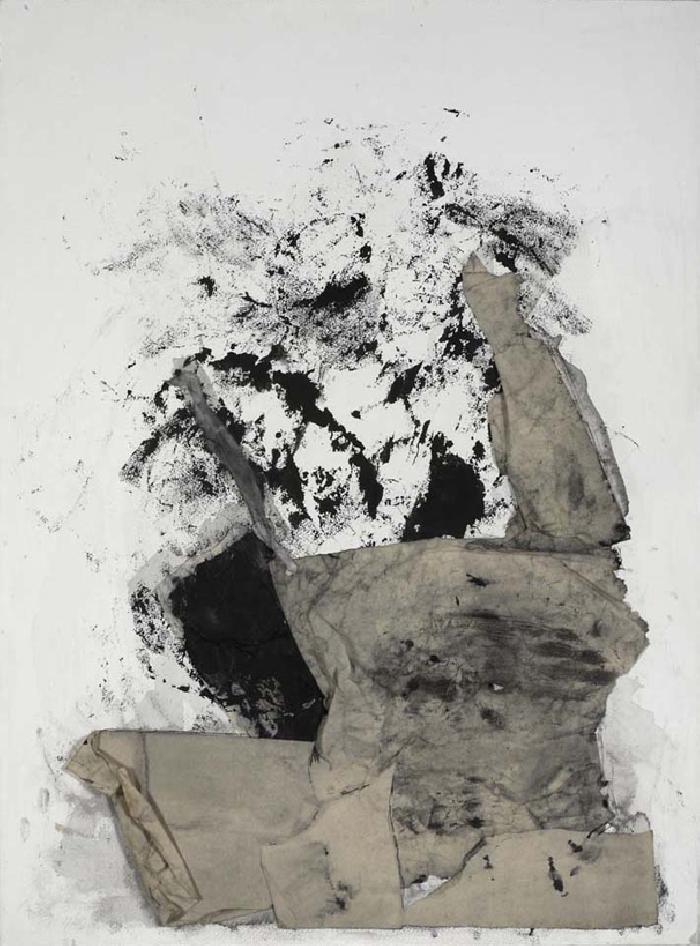
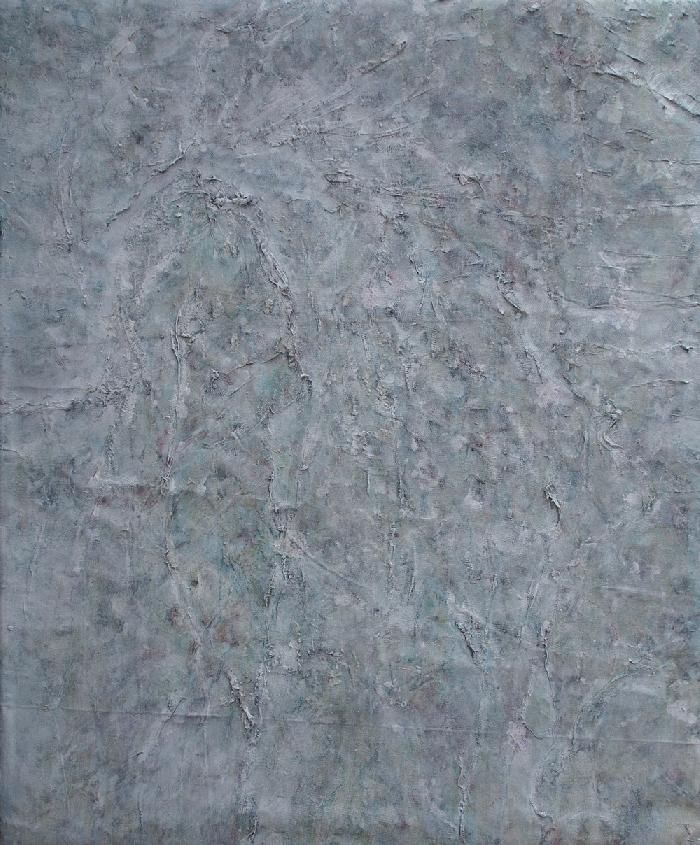
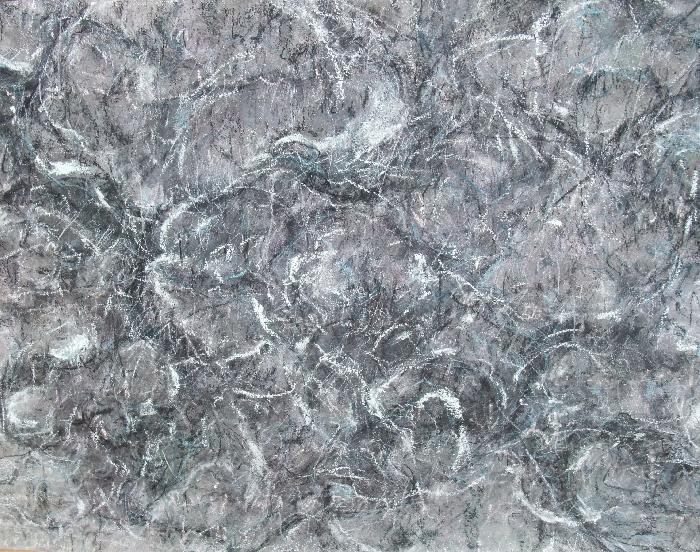
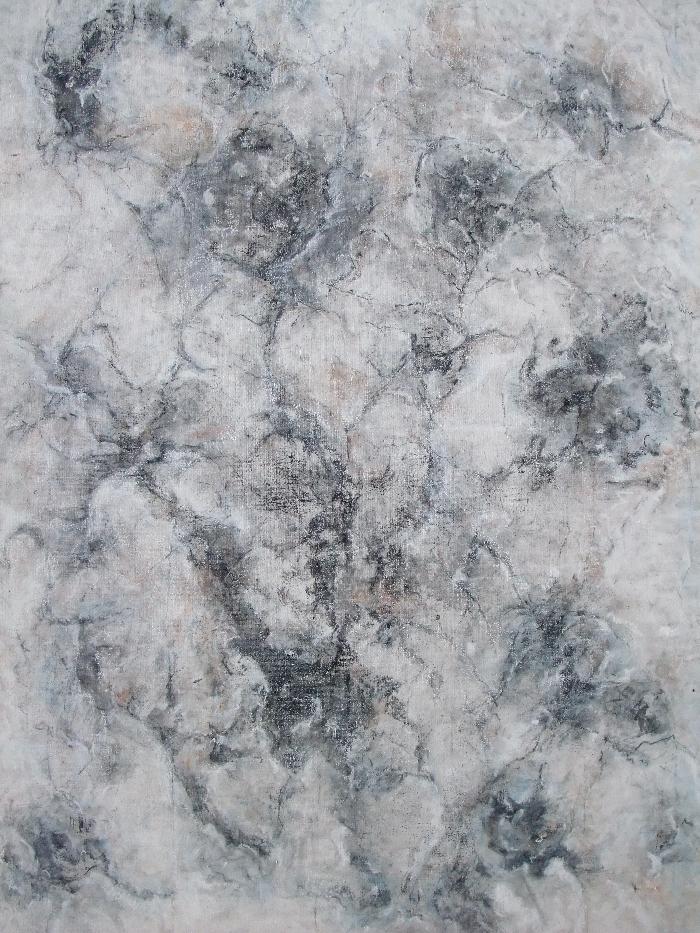
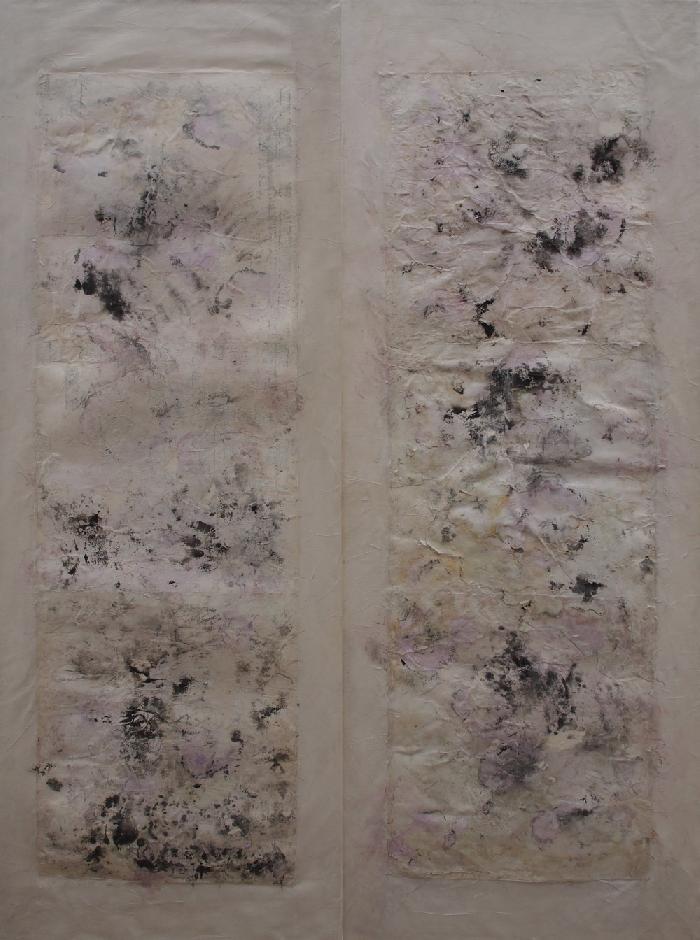
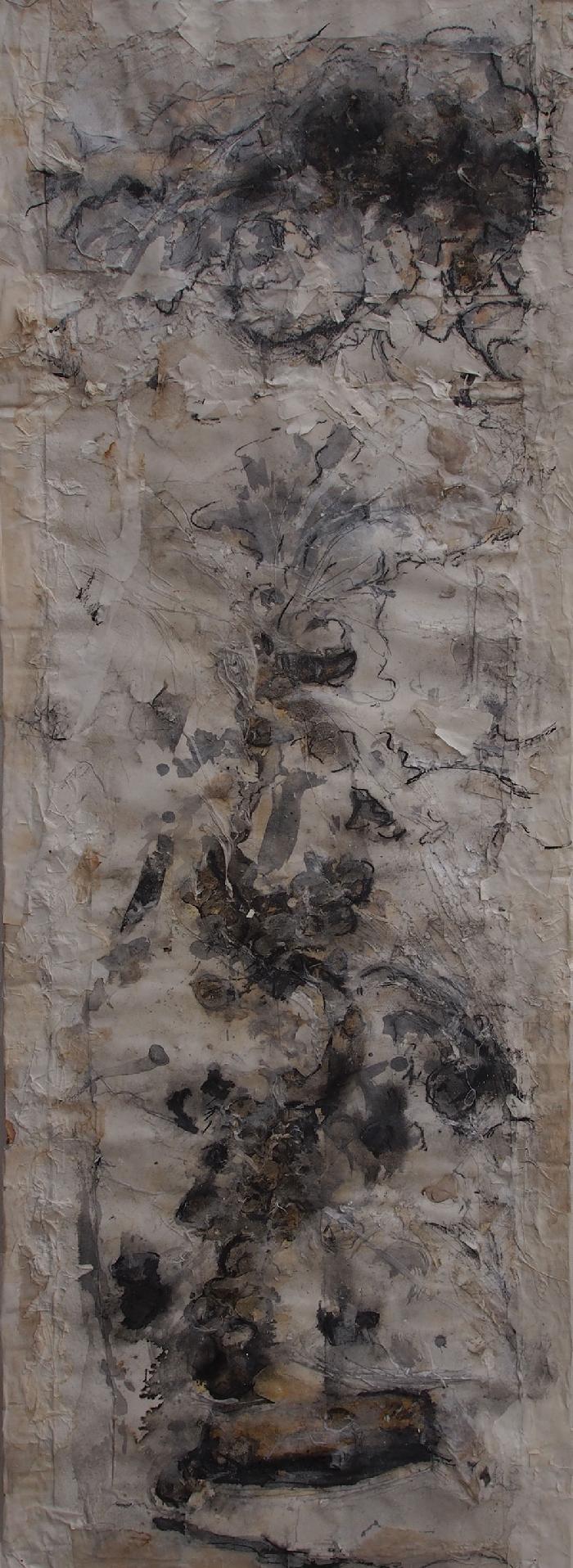
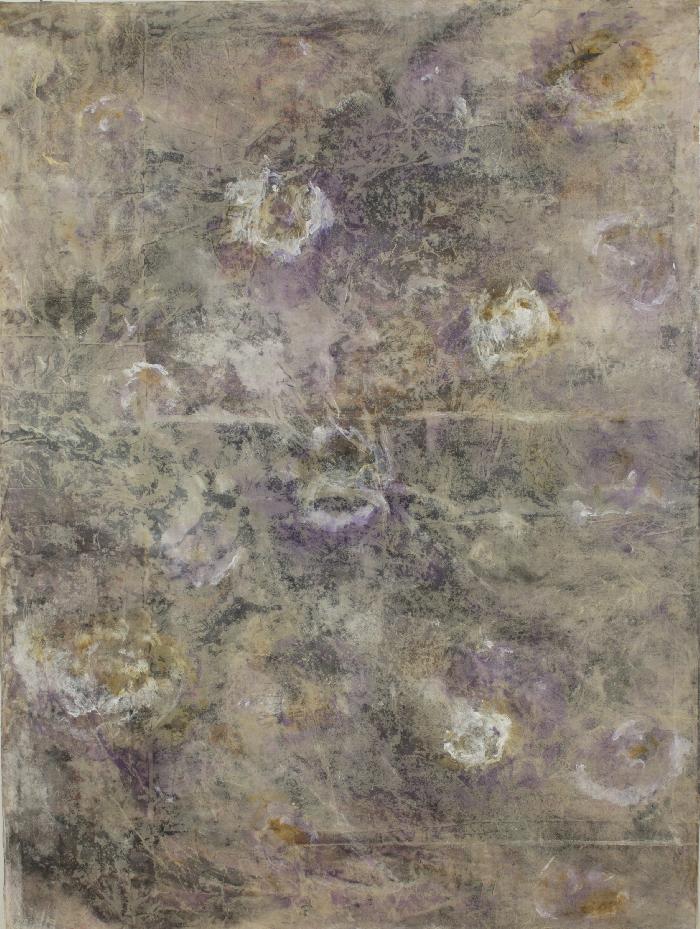
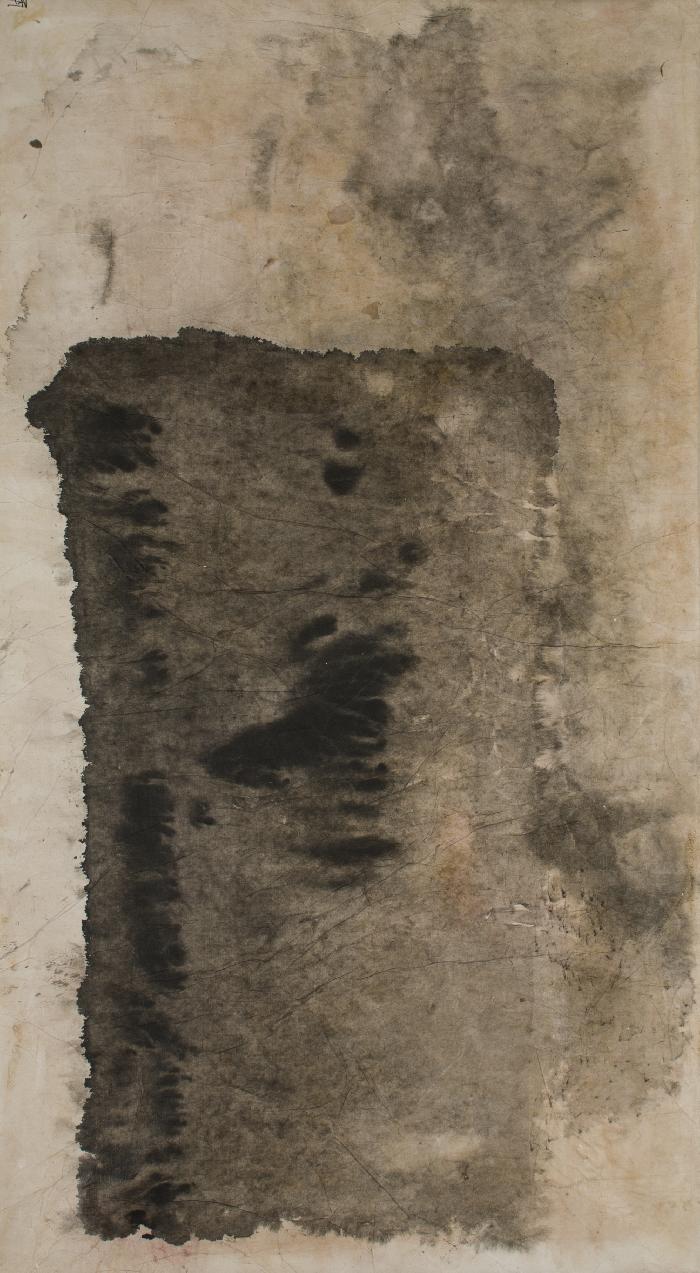
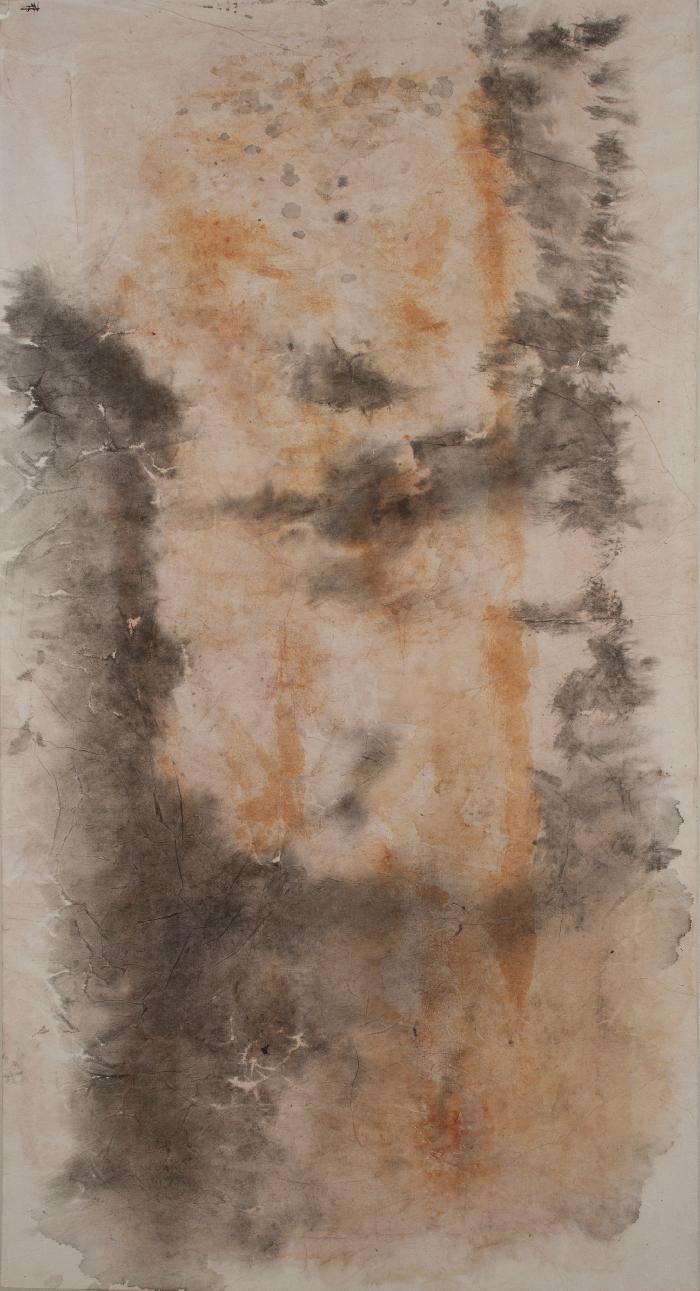
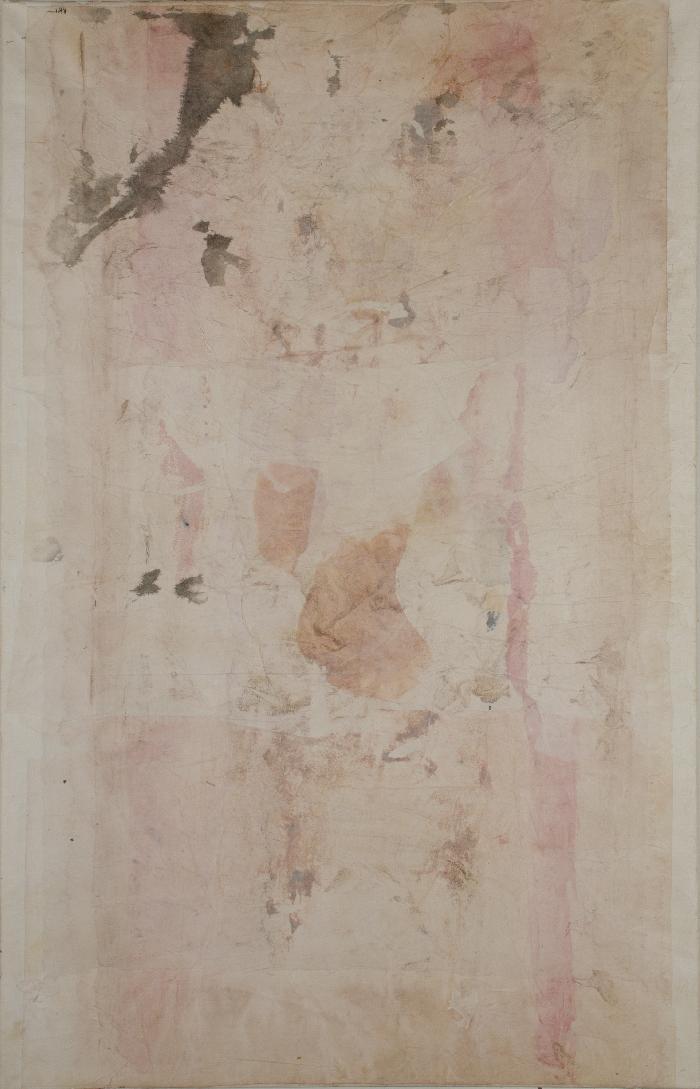
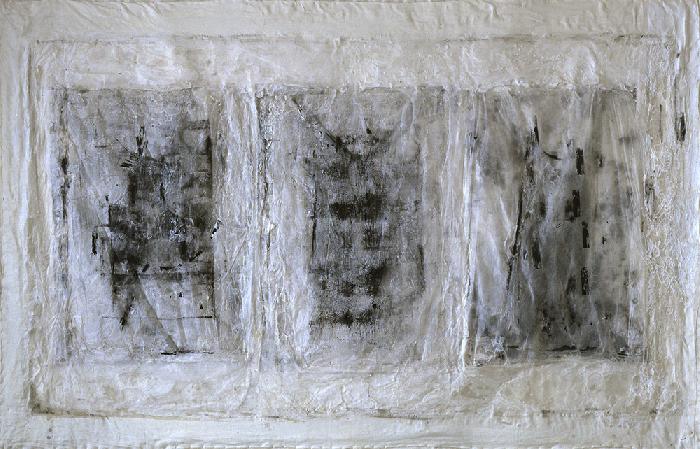
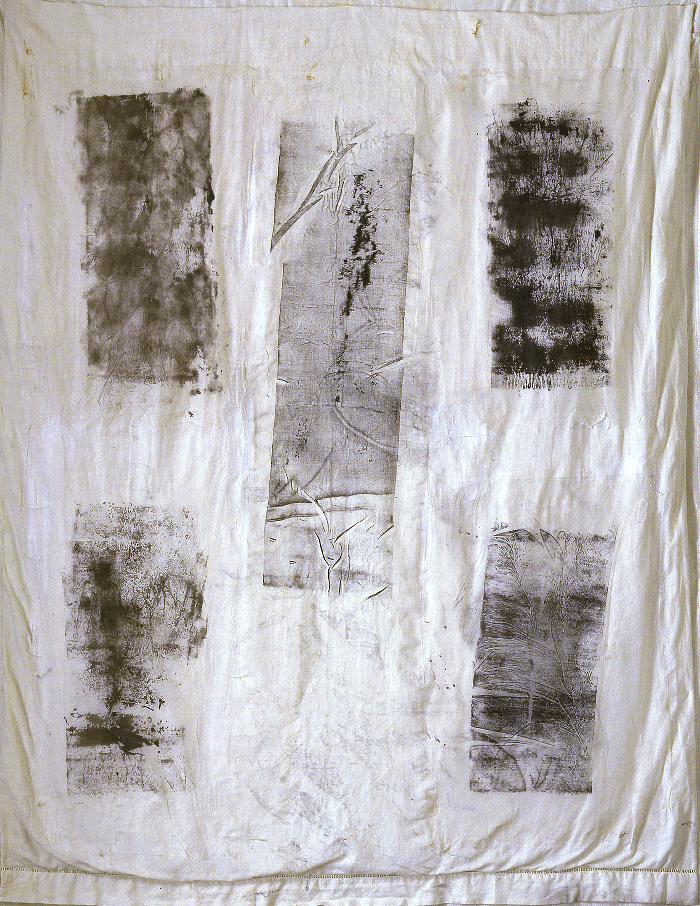
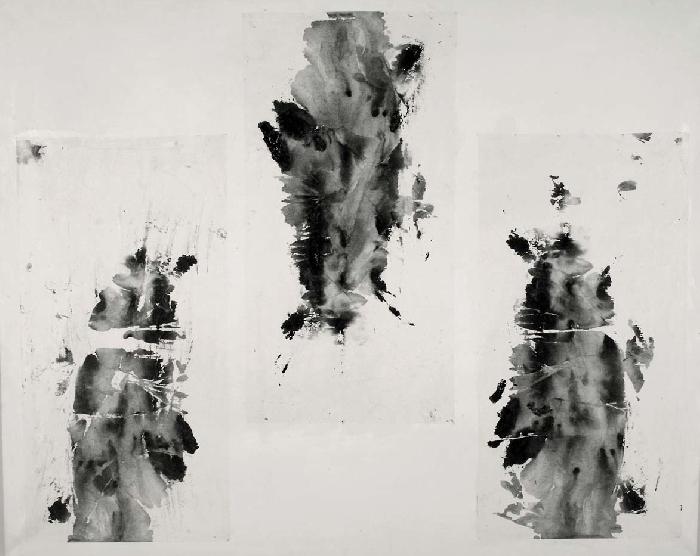
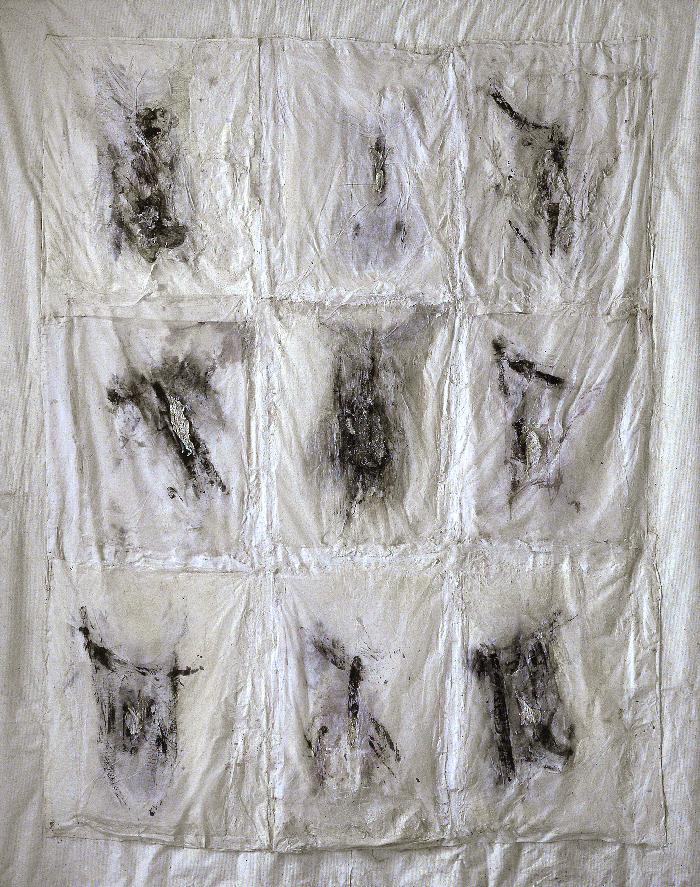
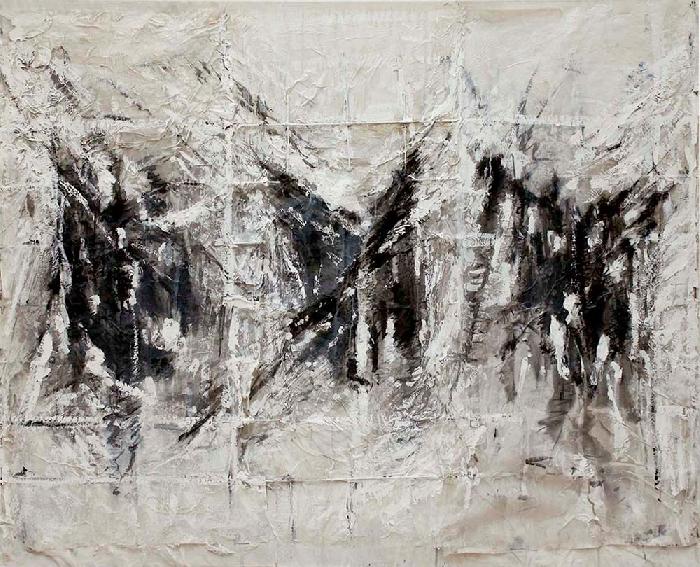
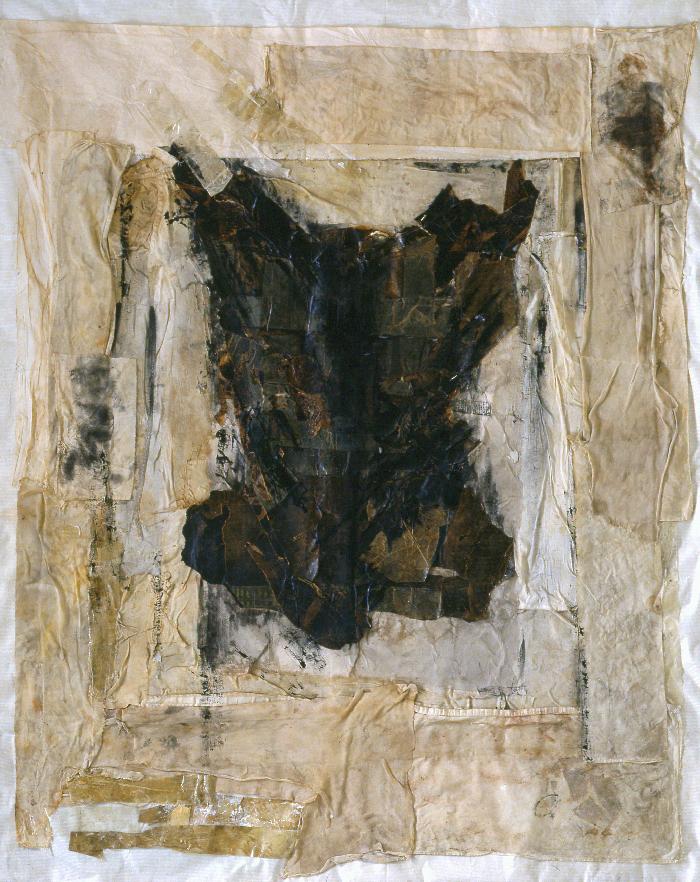
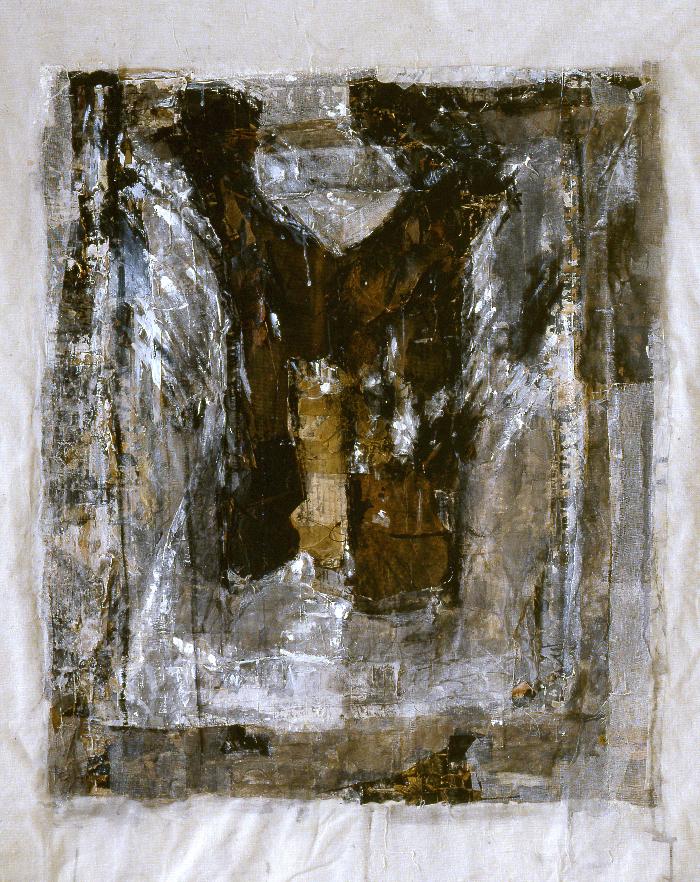
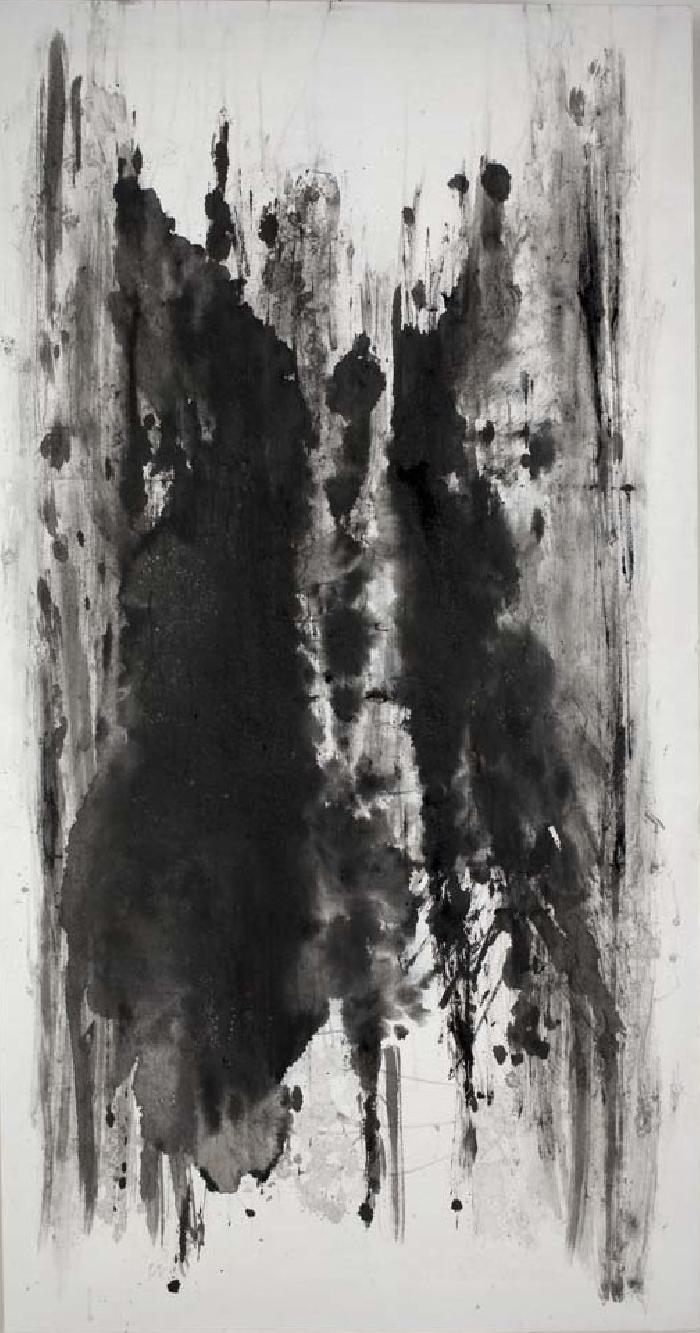
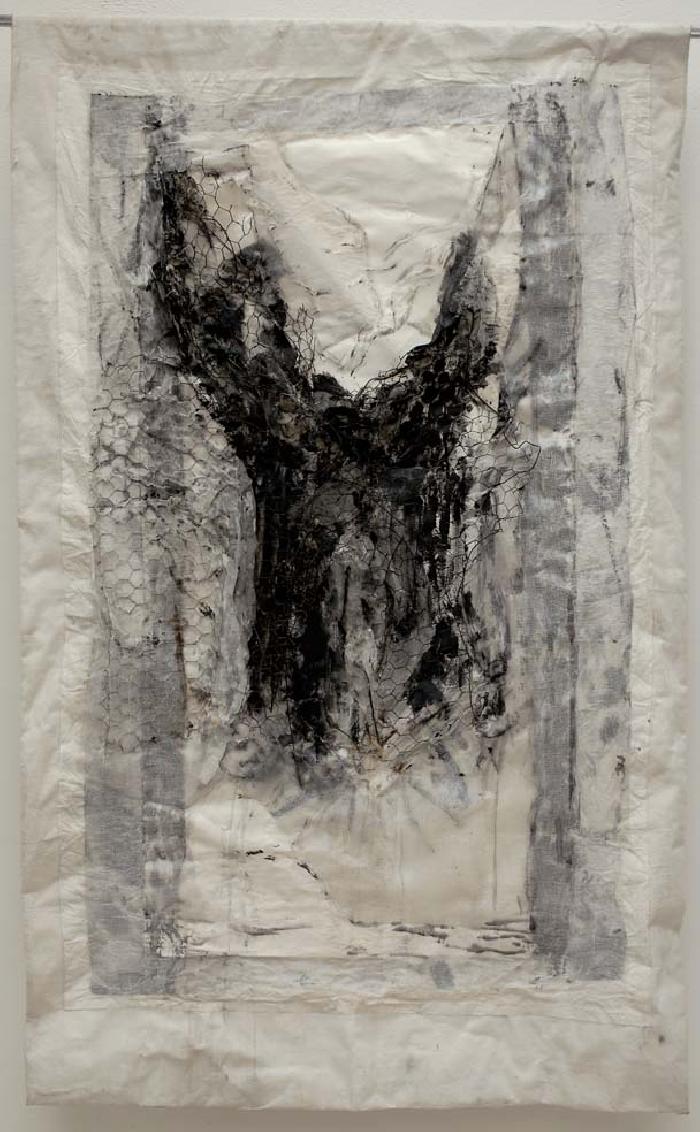
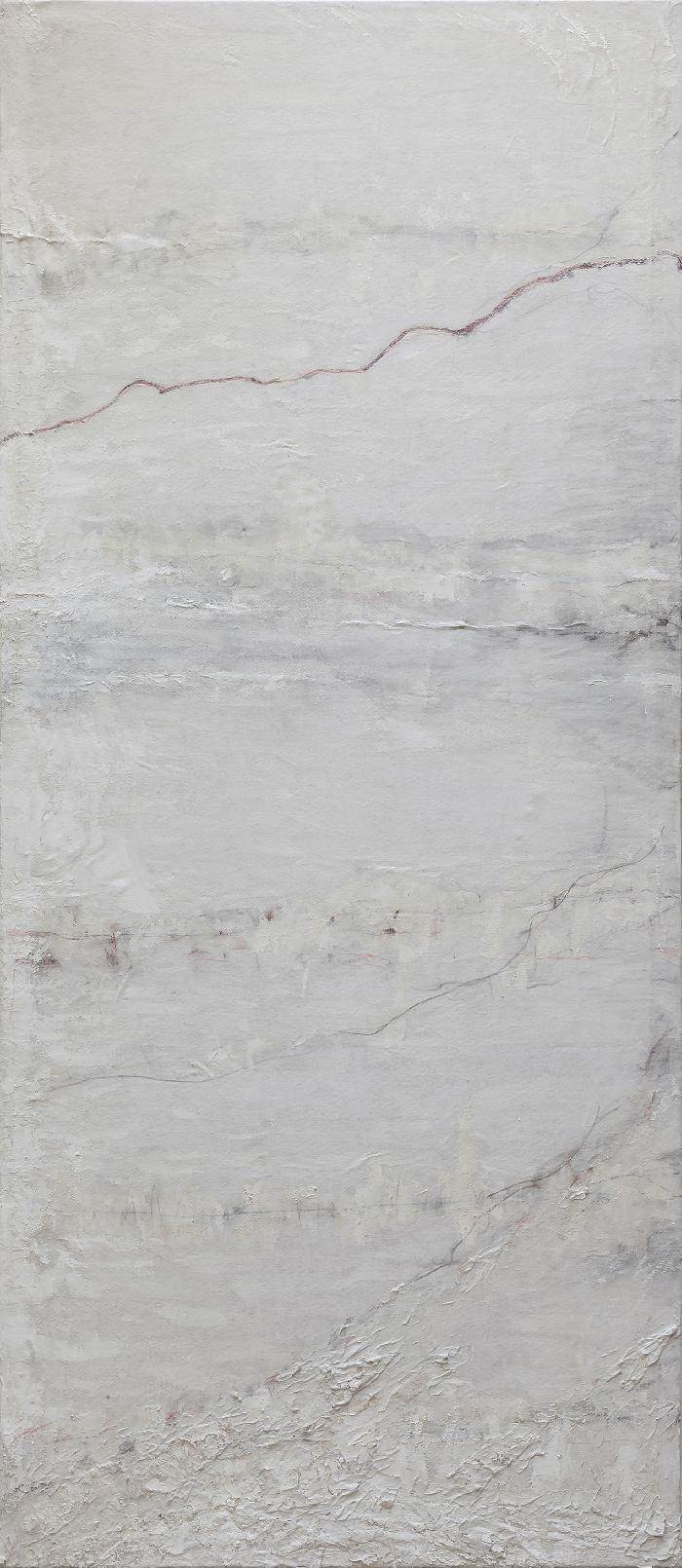
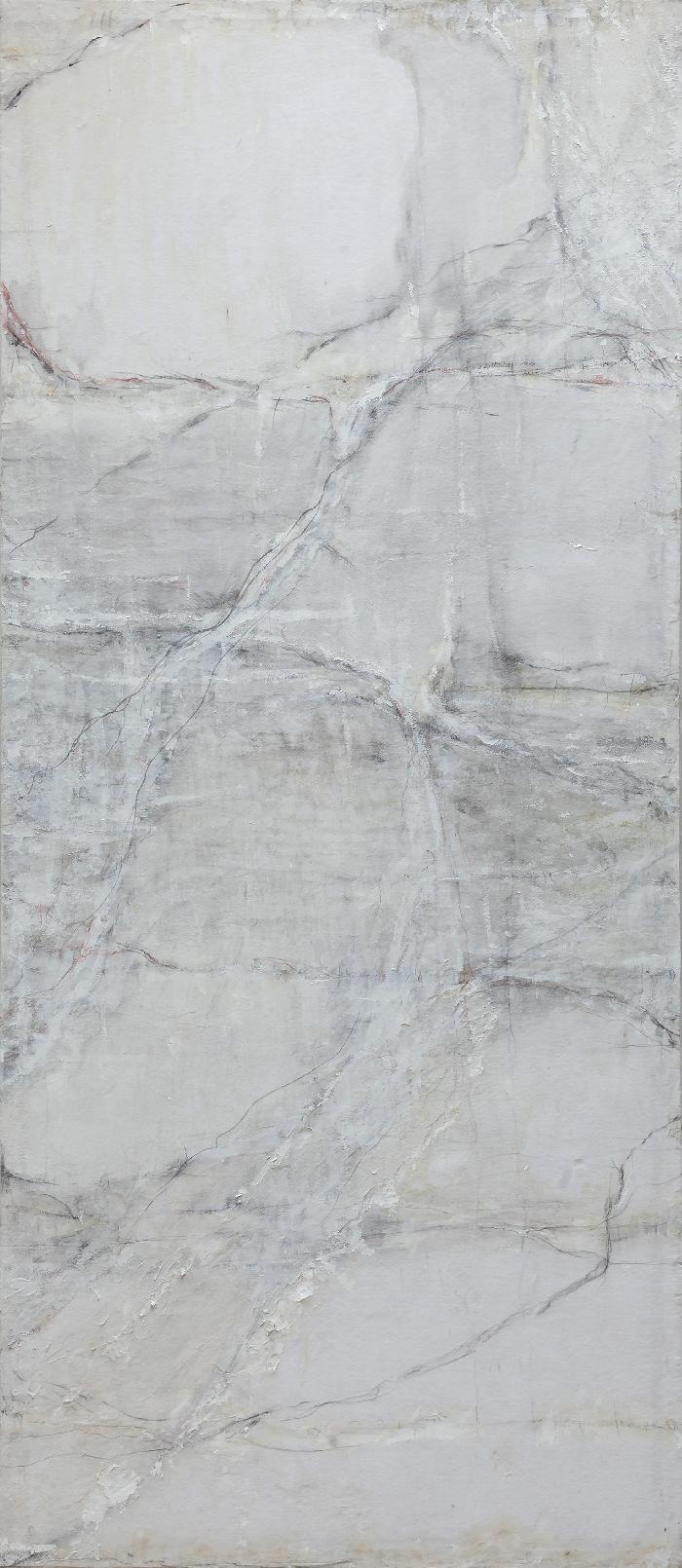
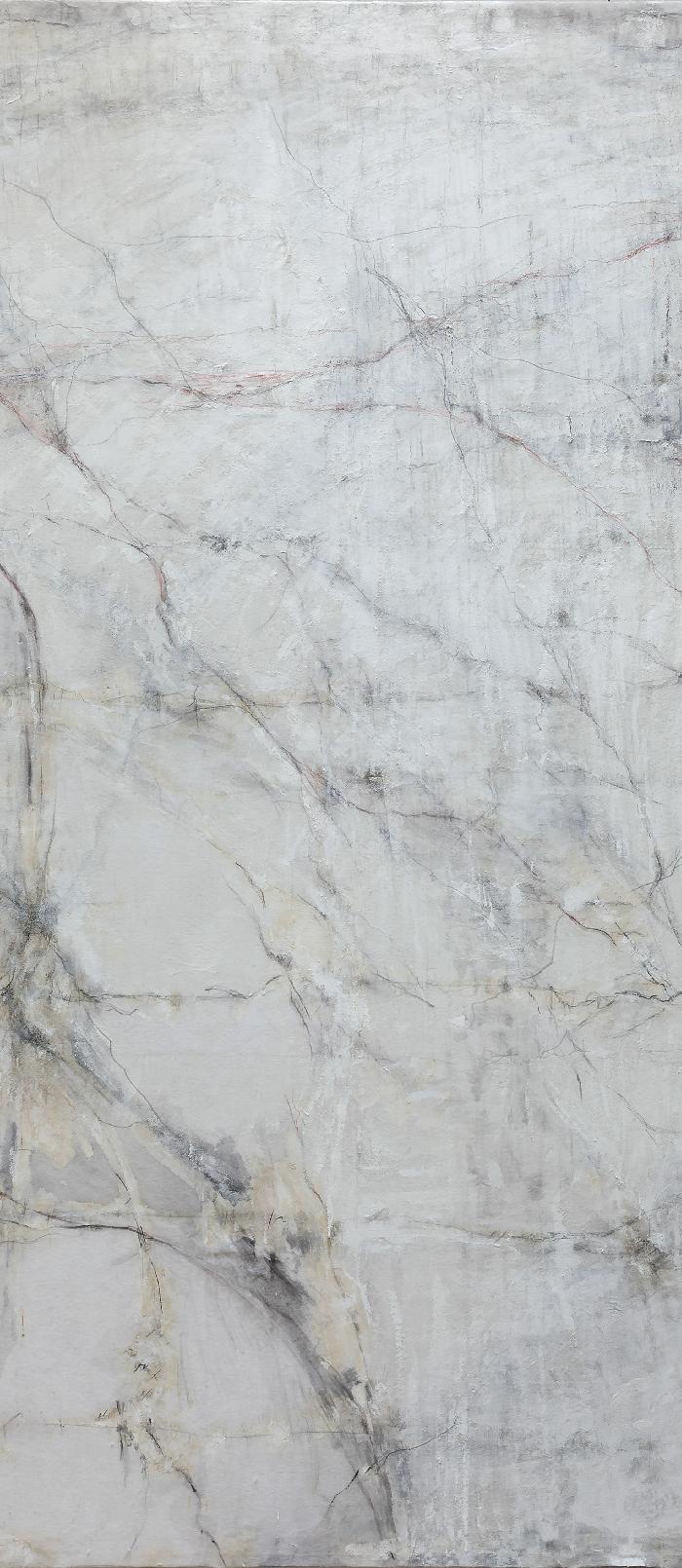
French artist Nadine Kohn Fiszel works with xuanzhi (traditional rice paper for Chinese painting and calligraphy), ink and barbed wire to express how she feels about the passing of time. Her intriguing exhibition The Falling Blackness is on show in Guangdong province's capital Guangzhou.
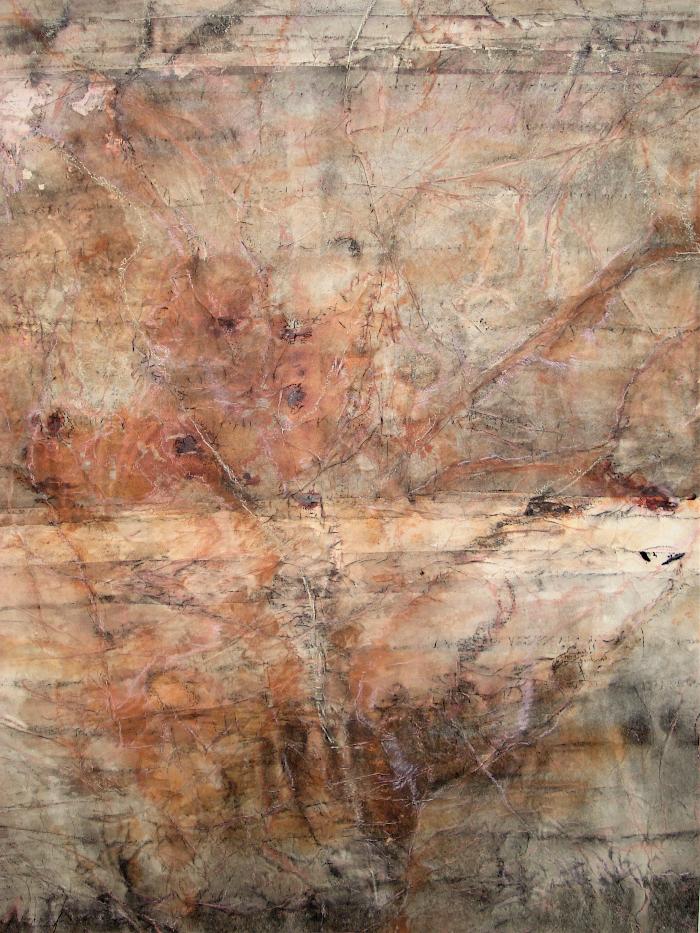
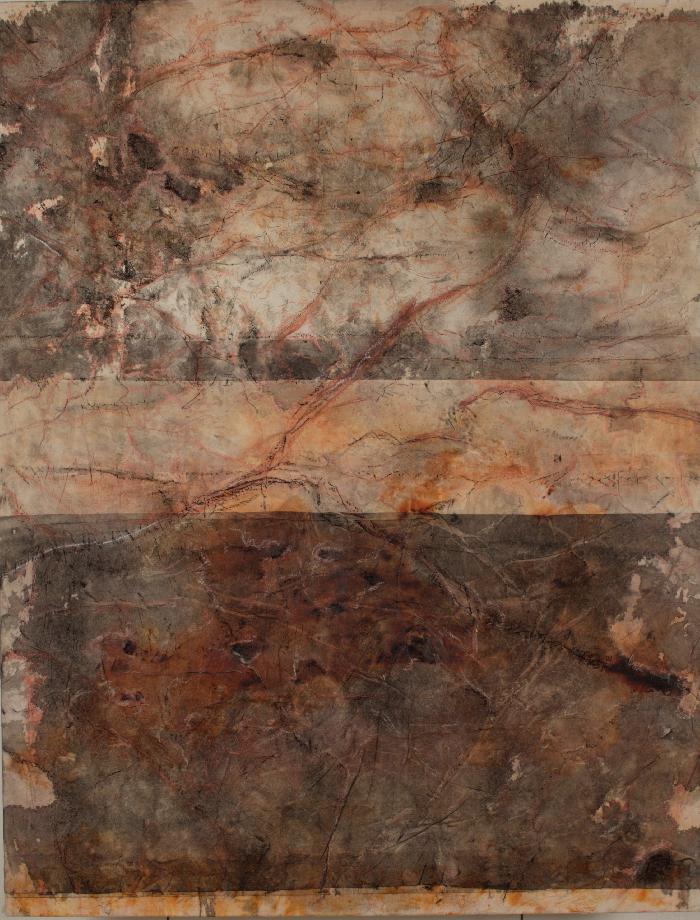
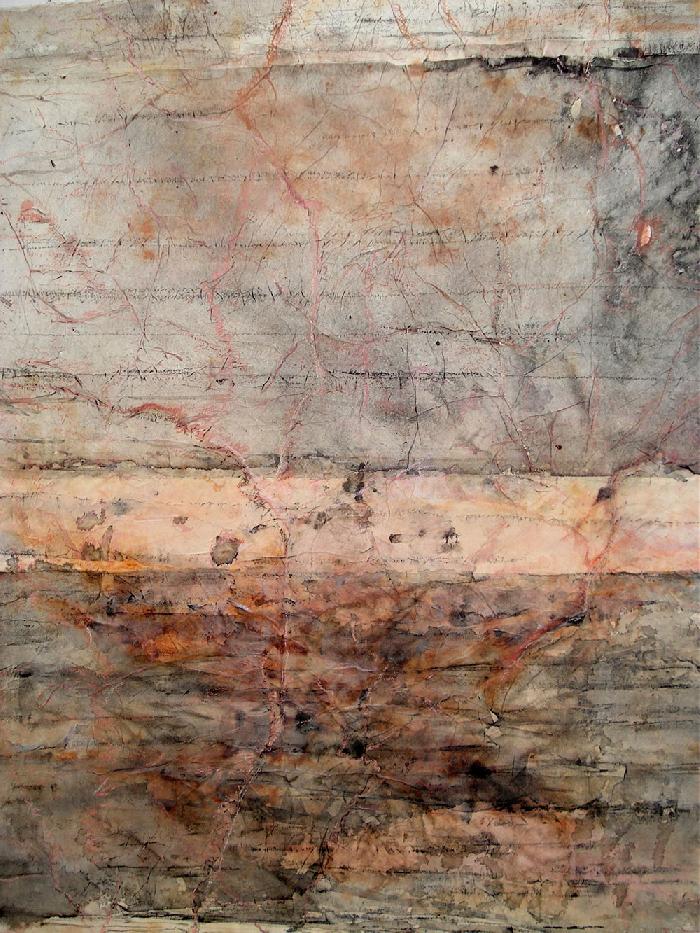
To manifest the theme of time lapse, Fiszel chose used and abandoned materials, such as rusty wires and rags. She also purposefully created subtle wrinkles on the xuan paper.
The versatile artist displays her paintings, installations and plastic artworks at her Guangzhou exhibition. The organizer also creates a festive feel with music and French wine.
9 am-7 pm, until July 23. EMG Art Center, C5, Redtory, 128 Yuancun Siheng Lu (Exit B,Yuancun metro station), Tianhe district, Guangzhou. 020-3866-3122.
Article of the China daily concerning the exhibition Memory lane
More than 50 medias reported the exhibition, i ncluding news papers,magazines and websites: 《中国日报China Daily》: https://www.chinadaily.com.cn/life/2012
Life of Guanzhou's article
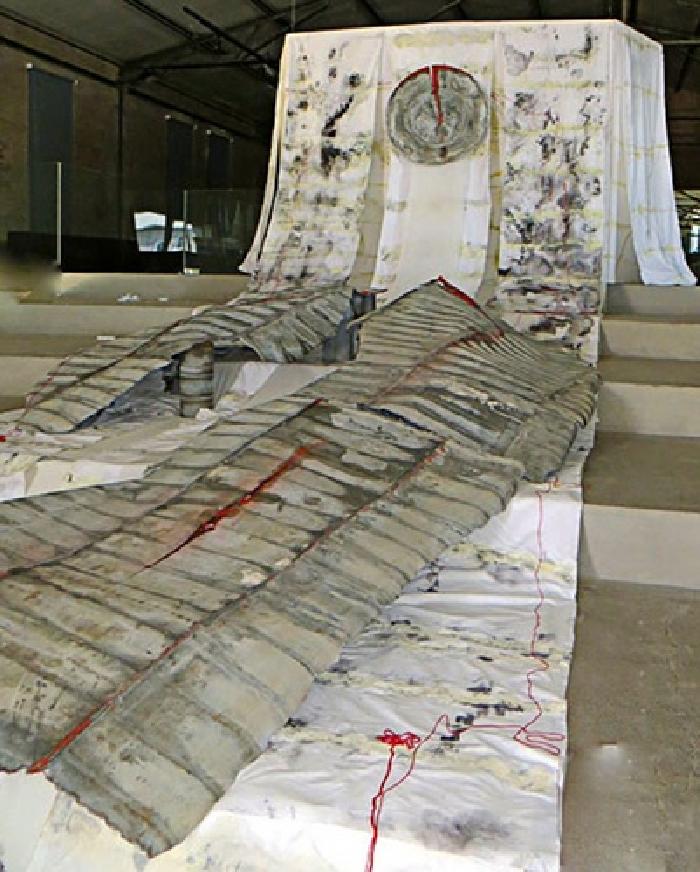
The video, produced, following the Beijing exhibition, was then an integral part of the interactive installation " Ma river ". the installation has been significantly modified to suit the exhibition in Guanzhou, instead of the interaction with the first video.
Pékin, may, 2012 ,12 june 2012 : https://nadinekohnfiszel.art/Installation-Ma-River-Pekin-Canton.mp4
Conférence sur l'installation 'Ma river' 12 juin 2012
How to shape signs
How can we suggest through signs a world of sounds, of visual meanings, of new poetical associations, different and yet complementary?
Punctuation marks - especially the question mark - give words sonorities that express interrogation in French and Chinese.
In this work I have shaped signs: something like new emoticons or smileys, these series of punctuation so often used in e-mail communication by young people, especially in China.
br have traced punctuation marks, commas in the shape of pins. I have drawn lines: hyphens, question marks; I have opened and closed brackets; all of them signs of doubt and asides.
Parenthesis (brackets), inserted in the text, without modifying its meaning conveys further information. Like an oval door it opens on a space of doubt and questioning. It enables discontinuity and digression; it accompanies my way of thinking and helps limit explanations.
This way of thinking and of creating, rhizome -like, proceeds by rebounds and resonance.
br Punctuation, which was codified in France as soon as the eighth century facilitates the reading of texts. The written text – up to then interpretable and difficult to segment - was clarified and became a language in itself, modulated by blanks, stops, pauses, and voids. These voids – neither interruption nor nothingness – are in Chinese Art an active principle, engendering breath, and fundamental in the process of creation. Punctuated reading with its changes of intonation, of inspiration engenders rhythm. Melodic inflections, codified cantilation and declamation are made possible. –br
In its beginning the question mark was more like a dot topped with a line zigzagging towards the right, no doubt echoing the ascending tone of the human voice. Drawn upside down it rapidly acquired its current shape. (Note that in Spanish there still is an inverted question mark at the beginning of the sentence and a question mark at the end). In (written) French the inversion of pronoun and verb is required. As soon as the eye perceives the question mark at the end of a sentence, the vocal tone is raised as on this flight of stairs.
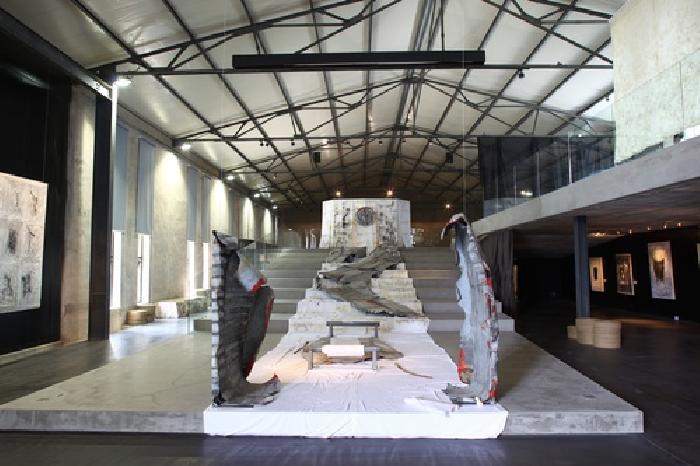
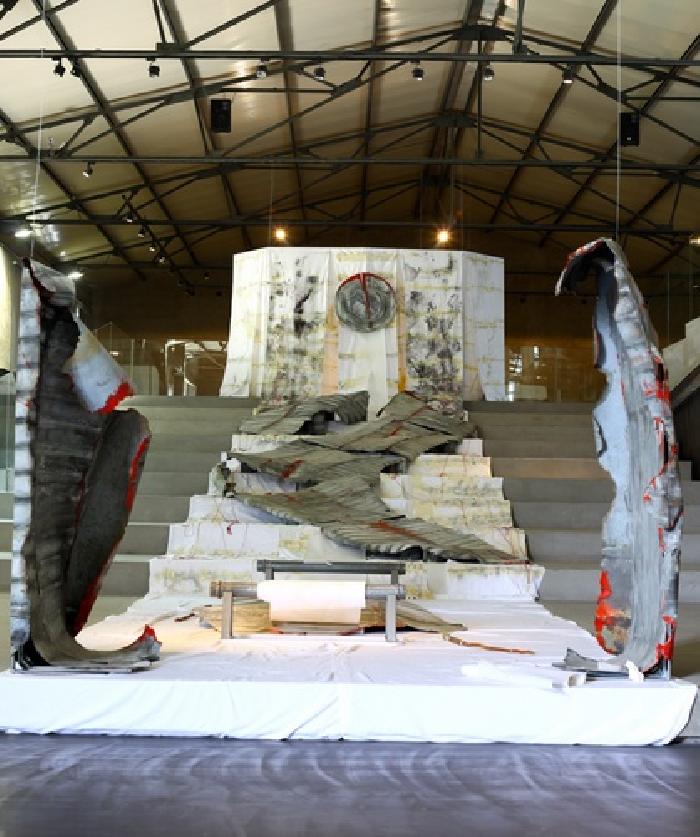
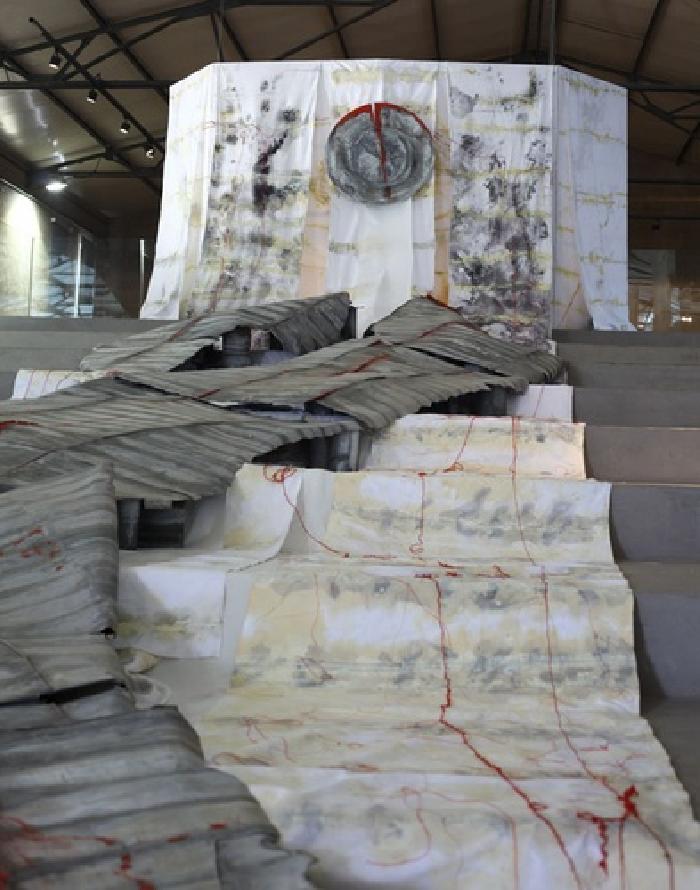
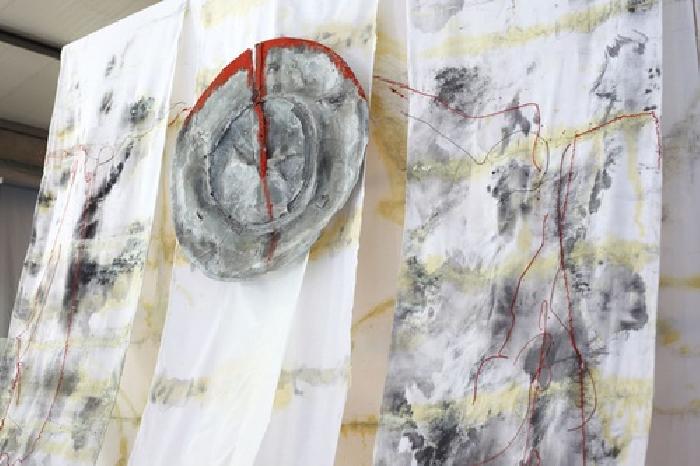
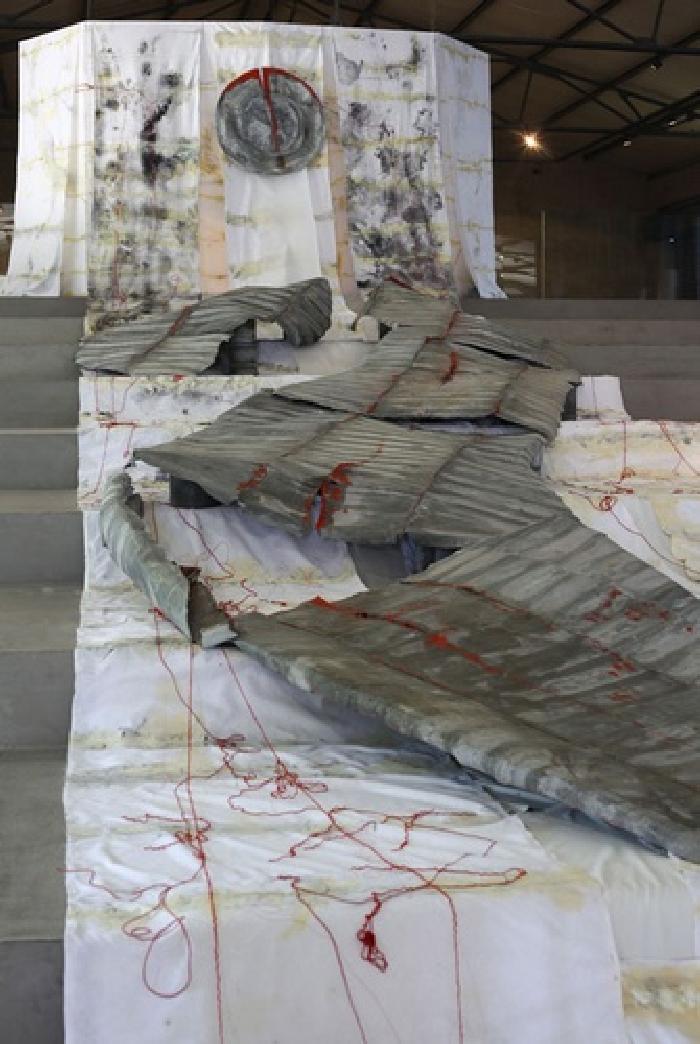
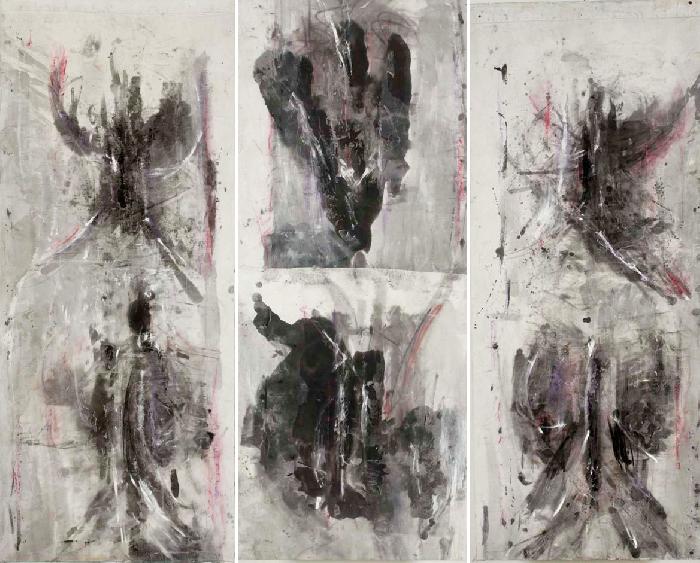
br Transformation and simplification of the Chinese written language occurred later, at the beginning of the twenties, reflecting deep societal change. Punctuation marks replaced “empty words” The particle MA added to the end of a declarative sentence turned it into a question without changing word order. Ma attracted me or should I said fascinated me. Hence I have replaced the interrogative form of my questioning by a sign, compulsory in French; here huge and set between brackets. It punctuates and makes my doubts and incertitude visible while forming another figure of speech, an oxymoron, and an ephemeral installation. If installing signifies staying in the same place, on the contrary, it is due to the constant interaction between different cultures that interrogation is born and lives. Installation involves interactive participation. It is a moment of shared writing, of calligraphy on an ephemeral roll, recoverable like a palimpsest if I do not ink the water with which you will be able to write your quotes, questions and comments. This fugitive moment becomes eternal when recorded and preserved by video. Material substrata are all important to me: they trigger imagination and thought. I have stuck for this installation to the more basic elements used in plastic arts. The number of materials was reduced to give ink, water and pigment better visibility. I have used various materials: zinc acting as the memory of passing time and bad weather; felt and unwoven fabric as memory of habitat, transhumance and clothing; thread and wire. - The metal – sheets of zinc -used for my punctuation marks is a malleable covering material, more or less like a coat. It has kept the traces of its contact with the framework – wooden laths - on which it was laid. The inner hidden side is imprinted, lacquered with dry sap, while the outer side, exposed to the elements - or more poetically to the changing skies – is covered with a whitish layer that protects and characterises it. Simple to handle, zinc has been widely used since Baron Haussmann renovated Paris back in the 19th century. It gives Parisian roofs their architectural identity. For this installation, I have used the zinc of the old roof of my studio. Stocked for ten years, I sometimes made etching plates and engravings out of it but had never dreamed of its current destination. It is impossible to weld old zinc; for this reason I have linked, imbricated the edges of thin plates, then burned and soldered their borders with a blowtorch. The main pieces (7) of my question mark are not connected together and the fractures between them are significant: they obey the geography and topography of the place (here the steps) and allow void to circulate. The cut out zinc sheets become scales, strange carapaces partially covered with illegible red writing, an imaginary/chimerical “shell and bone script”. The supports have been made out of thin strips cut in old zinc sheets., - Felt is a very ancient material made by pressing fibres and various animal hair, especially wool. It absorbs moisture and is extremely resilient. It is a non-woven textile. Used in the beginning as construction material by nomadic tribes it was later used everywhere, especially in cold windy countries. It absorbs ink and water. Calligraphers use it as blotting paper beneath their drawing pages. It receives the faded print of their written texts and thoughts. It is the symbol of both loss and retention. I must admit: it violently reacts to pigments. It is easy to model and mould but difficult to paint, as water and oil tend to spread on its surface, disrespecting hand-drawn lines. For the last three years it has been the support for my graphite powder, zinc pigment, crayon, pastel and sometimes-acrylic paths and landscapes (which I call my graphitscapes), It covers the screen and the steps. A screen usually preserves privacy, here paradoxically I invite you to walk along and round its panels and lift its curtains. - Paper, which is also unwoven, receives your writings and their projected images. - Pins and thread perform their original function. Pins are a link between body and clothing, sewing and geography. They guide the eye and, blending with lines and drawings, delimit my landscapes. Unlike acupuncture needles, they suggest abandonment of body and meridians but instead invitation to inner journeys (within oneself). - Wire, I have always used as framework and grids. - Staple vocabulary and materials: abandoned, disused, taken back, rusted wire, discarded fabric, darned, disdained… all becoming matter for thinking the future. - The folds of the fabrics, which I work on, bear the marks of passing time; useless miniature dikes and dams catching the eye and trying in vain to modify elements, conditions, and memory. The door and screen lead to thresholds and limits. - About my lettering: unformed letters, indefinite characters, and forgotten tongues, mixed writing, all combined in an unconscious Esperanto. - The colours here are the ones I use most frequently; I associate them with China: blacks, reds, whites, greys, light, deep, dense, thick, intense. Each of them a world, a wave in itself. 。 Conclusion. Some of you will see a human back in the paintings I am showing around this installation. An acephalic (headless), sexless back standing on a threshold, hesitating between present, future and past, that may evoke Paul Klee’s “Angelus Novus, described by Walter Benjamin as a body pushing « into the future, to which his back is turned, while the rubble-heap before him grows sky-high » And yet the lines I have traced on the felt that covers screen and floor are those of a path. An intimate, individual path, but whose many ramifications we will travel. There, connected to the elements, to other civilizations with their own histories and richness of thought, we will be able little by little to build a common future. For “Croisements” I have tried to weave a web of image, meaning, sound and resonance. The Chinese sound MA fleetingly/briefly takes me to other shores: to the Japanese interval between space and time, to the Hebraic Mah –both pronounced MA. Punctuation -and its varied shapes- makes me meditate on the fertile connections to be found in the Chinese architectural representations of the circle, square and rectangle. The zinc cover with its burnt edges is the beginning of a reflection on skin, sewing and clothing. The rolls of paper carry me to the waves of the ocean; the writing leads me to the river. –
br I hope everyone will be able to find in this installation their own intertwining. But which ones…….. ?
Exhibition review in English by Victor Wong, exhibitions curator in China
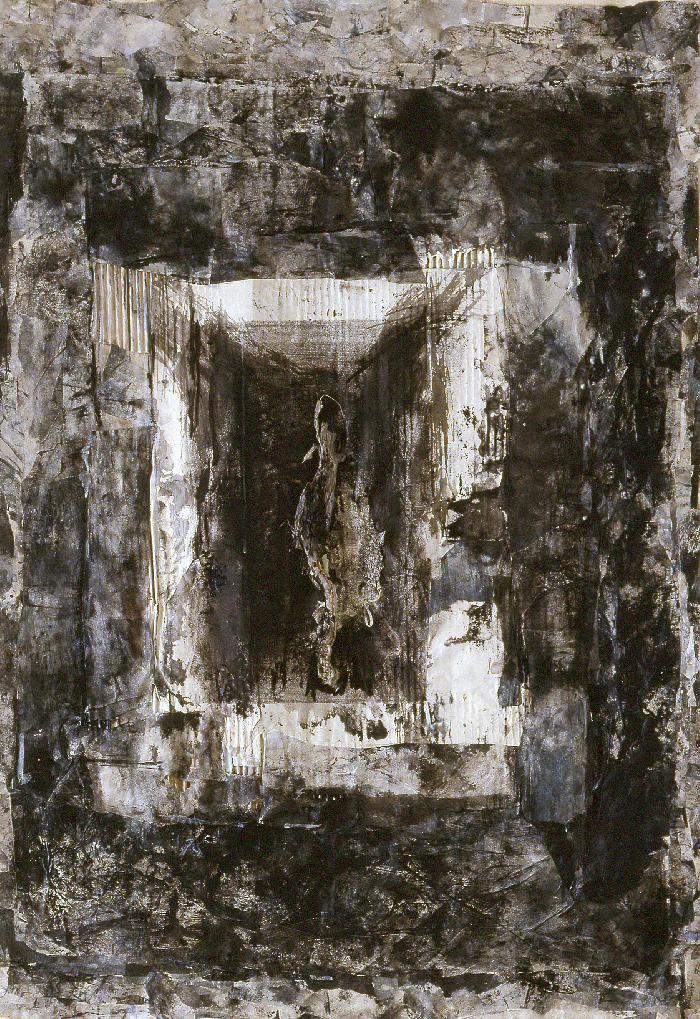
The first time I met Ms. Nadine Kohn-Fiszel was during Art Canton 2010, among those art works shown in the Art Fair, not like the other artists who tried to express their emotions and concepts, attempting to display their inner world as much as they could, Nadine wanted to let go whatever left in the past, or existed at the present, or will come in the future. There was a force which contained within her works and dissolved everything in front. “Tombant noir au grillage” is one of my favorite paintings, the composition and perspective of the painting have an invisible power to attract the attentions and grasp the viewer into the “black hole” of memory. The door to the unknown world arouses the curiosity, at the meantime brings the fear to the surface of consciousness. But the iron mesh forges a blockage, symbolizing a memory unbearable to recall, a spiritual struggle, and a painful breath, but everything will be washed away as time goes by. Nadine uses a way of “lightness” to handle the “heaviness” of heart and memory, she guides you to explore far into the depth of memory, meanwhile obstructs the “entry” and “information embedding”. The tableau she presents in a western way has surprisingly the similarity with the one of Chinese ink and wash drawing. Every time when I see the painting, I can’t help holding my breath, the desire of peeking the secrets of soul is increased, but restrained by another kind of power at the same time. The tension puts the viewer in dilemma, and drives him or her to explore more about human nature. It’s as if you were going through a meditation every time when you gaze at the painting. The art work reflects a kind of loneliness and coldness as well as a sense of historical heaviness, moreover, it always give you a feeling of nihility. As Genesis of Bible says: in the beginning, God created the heavens and the earth with “word”, but Nadine dissolves what He created with her “painting”. The installation “Ma River” is surrounded by her paintings in EMG Gallery Beijing. The huge reversed question mark made of the metal zinc is placed on the ascending steps in the center of the art space. On the top step there is a big dot which is part of the question mark, symbolizing the origin of everything in the world. In Chinese, the word “ma” is put at the end of the sentence, thus becomes an interrogative sentence. And the sound “ma” is the first incantation (dharani). “The earth was without form, and void; and darkness was on the face of the deep. And the spirit of God was hovering over the face of the waters. Then God said, “let there be light”; and there was light”. God created the world with “word”, and the “word” is the sound made out of God. The installation draws the viewer back to the beginning (the origin), and confronts him or her with a big question mark “why”. On the other hand, the reversed question mark suggests that the earth is only the shadow of heaven, and what we see with our eyes are only the reflection on the surface of water. The “ human backs” in the paintings around the installation stand in the threshold, hesitating between past, present and future, but all the forces come from the origin, the source, and the question mark, everything is connected, and all those paintings become the extension of the installation. What is to be is decided by what it was originally. The installation generates a great power at the centre like a spring of water, and the spring becomes a river, and the river flows into the sea… “I am the way, the truth, and the life, no one comes to the Father except through me”, here “me” stands for “ma” – the question mark ”?”…